Site and Civil Services
Earthwork and Heavy Civil Overview
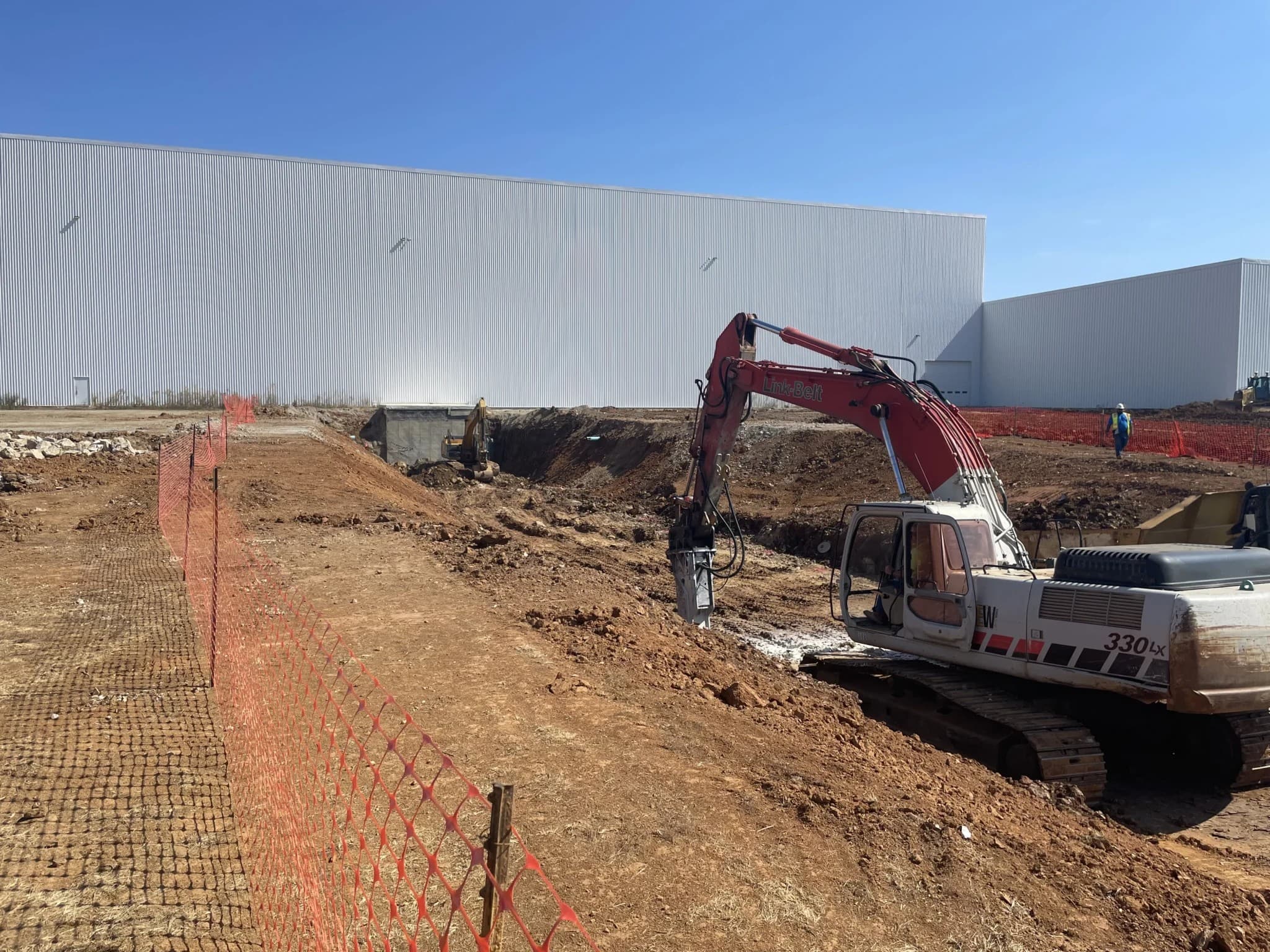
Commercial Contractors of Dallas delivers earthwork and heavy civil packages for commercial, industrial, and mixed-use developments across the Dallas metro. Civil work sets the conditions for every phase that follows. A grading program that misses compaction targets, a utility corridor that conflicts with the foundation layout, or a detention basin that under-performs in a spring storm event — any of those failures creates downstream cost and schedule damage that cannot be recovered without expensive rework. We manage civil execution to prevent those outcomes from the start. Dallas presents a specific civil engineering environment. The Blackland Prairie clay that dominates the geologic surface layer across much of inner and north Dallas shrinks and swells aggressively with moisture change. Wet spring conditions followed by the long dry summer create soil movement cycles that can compromise both subgrade compaction and underground utility trench stability. We specify lime treatment depths, stabilization protocols, and trench backfill requirements that address the actual soil conditions on each site rather than treating all Dallas clay as the same problem. Storm drainage design for Dallas commercial sites has grown more constrained as the City's stormwater review process has become more thorough. Trinity River basin tributary ordinances, City of Dallas storm drain sizing requirements, and regional detention requirements affect development in different parts of the city differently. We coordinate with the civil engineer of record early in preconstruction to confirm that the drainage and detention design matches the site's actual tributary conditions and the City's current review standards — avoiding the back-and-forth permit cycles that delay civil package release. Utility corridors on Dallas commercial sites frequently encounter existing infrastructure: older water and sewer mains, Oncor and Atmos distribution lines, communication conduits, and legacy storm systems that are not always accurately mapped. We use utility locating as a standard preconstruction step before any trench is opened, and we build coordination protocols with Dallas Water Utilities and other providers into the project schedule from day one. For large-format industrial sites near the I-35E Stemmons Corridor, the I-20 south arc, or the Dallas Logistics Hub, mass grading programs can involve significant import or export volumes. Haul route planning, truck traffic management near DISD or residential adjacencies, and dust control during dry North Texas summers are operational requirements we address in the site logistics plan rather than reacting to neighbor complaints after work starts.
Why Choose Commercial Contractors of Dallas for Earthwork and Heavy Civil?
As a Dallas-based commercial contractor, we understand the local permitting requirements, subcontractor networks, and construction logistics specific to the DFW metroplex. Our earthwork and heavy civil services are built around the unique demands of North Texas commercial development — from soil conditions and weather patterns to municipal code requirements across Dallas, Fort Worth, and surrounding jurisdictions. We coordinate directly with local inspectors, utility providers, and trade partners to keep your project on track.
Scope Coverage
- Clearing, grubbing, and rough grading for commercial and industrial pads
- Lime treatment and subgrade stabilization protocol for Blackland Prairie clay sites
- Storm drainage design coordination, detention basin construction, and outfall management
- Water main, sanitary sewer, and utility corridor installation with locating and agency coordination
- Subgrade preparation, compaction testing, and release verification for foundation and paving trades
- Roadway, truck court, and parking field sub-base preparation
- Erosion control installation, maintenance, and closeout stabilization before permit release
- Haul route planning and dust control management for large-volume grading programs
- Utility agency coordination with Dallas Water Utilities, Oncor, and Atmos Gas
- Grading and drainage permit coordination with City of Dallas Development Services